

The marine layer that rolls over Marin most mornings, the fog that lingers in Mill Valley canyons, the damp winters in San Rafael and Novato: all of it puts moisture into the air, and moisture is what mold needs to grow. If you’ve caught a musty smell in a hallway closet or spotted a dark patch behind a bathroom vanity in an older home, that concern is reasonable and common here.
This guide covers why mold removal in Marin County comes up so often, what the warning signs can mean, and how a professional handles it. Pacific Restoration has worked in these conditions for over two decades.
Key Takeaways
- Marin’s coastal humidity and older housing stock create above-average conditions for mold growth.
- Mold is usually a symptom of a moisture problem, so finding the water source matters more than wiping the surface.
- Cleaning visible mold without fixing the moisture almost always lets it return.
- A musty odor, spreading discoloration, or recurring condensation should be evaluated by a qualified professional.
- Professional removal uses containment and air filtration to keep spores from spreading during the work.
- Fast action helps, since mold can begin forming within 24 to 48 hours of water exposure.
Moisture Sources Common in Marin Properties
Mold follows water. The usual sources here include:
- Coastal humidity and condensation on cool interior surfaces.
- Slow roof leaks that show up as ceiling stains long after the rain.
- Plumbing leaks under sinks, behind walls, or at old fittings.
- Damp crawl spaces and poorly ventilated attics.
- Grading or drainage that pushes water toward the foundation.
Finding the source is the first real step. Removing mold without addressing the water that fed it only buys time.
Signs You May Have a Mold Problem
Mold isn’t always visible. Watch for:
- A persistent musty or earthy odor, especially in closets, basements, or bathrooms.
- Discoloration on walls, ceilings, or grout, often black, green, or gray.
- Condensation that keeps returning on windows or cold walls.
- Allergy-like symptoms indoors, such as coughing or sneezing, that ease when you leave the house.
Symptoms alone don’t confirm mold, and they can point to other causes. What they signal is that the area should be inspected rather than guessed at.
Why Surface Cleaning Isn’t Enough
Mold spreads through microscopic spores, and much of the growth can sit inside walls, under flooring, or in a crawl space where you’ll never see it.
Wiping the visible patch removes the part you can reach and leaves the rest. It also leaves the moisture problem in place, so the growth comes back in the same spot.
Warning
Scrubbing or tearing into a large moldy area without containment can push spores through the rest of the house. Larger jobs need containment before anyone disturbs the material.
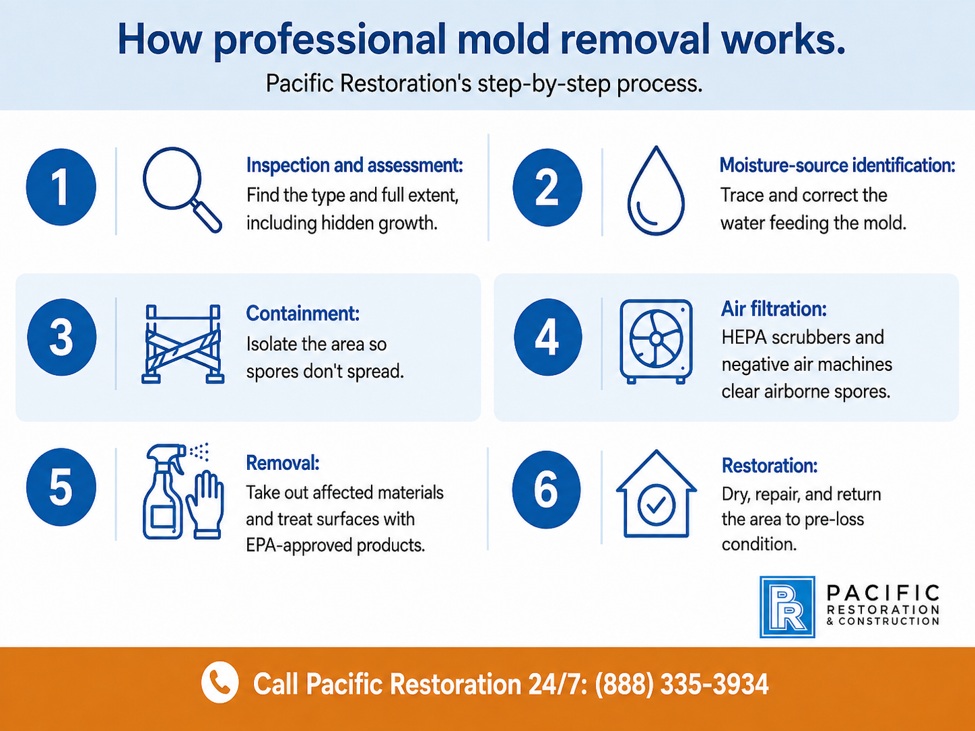
How Professional Mold Removal Works
A structured process keeps the work safe and thorough:
- Inspection and assessment. A technician identifies the type and extent of growth, including hidden areas in walls, subfloors, and crawl spaces.
- Moisture-source identification. The team traces the water feeding the mold, since that source has to be corrected for the repair to last.
- Containment. Affected areas are isolated so spores don’t travel to clean parts of the property.
- Air filtration. HEPA air scrubbers and negative air machines pull airborne spores out of the workspace.
- Removal. Contaminated materials are removed and surfaces treated with proven, EPA-approved products.
- Restoration. Affected areas are dried, repaired, and returned to pre-loss condition.
Preventing Mold from Returning
Once the source is fixed, a few habits lower the odds of a repeat occurance:
- Run bathroom and kitchen fans
- Keep indoor humidity in check with dehumidifiers during damp stretches
- Address leaks quickly
- Improve airflow in closets and low-traffic rooms
Common Mistakes Homeowners Make with Mold
- Bleaching the surface and assuming the job is done.
- Ignoring the moisture source, so the mold returns.
- Disturbing a large area without containment and spreading spores.
- Waiting weeks to have a spreading spot inspected.
Pro Tips from the Field
- Check north-facing rooms and low-airflow spaces first, since they stay damp longest.
- Act on any water intrusion within 24 to 48 hours, before mold has time to establish.
- Trust your nose. A musty smell with no visible growth often means moisture is hiding somewhere.
- Photograph any damage before cleanup for your records and insurance documentation.
When to Call a Professional
You can monitor a small, isolated spot after fixing an obvious leak. Call for a professional assessment when growth:
- Covers a larger area
- Keeps coming back
- Involves your HVAC system
- When anyone in the home has asthma, allergies, or a weakened immune system
Recurrence and spread are the clearest signs the moisture problem hasn’t been solved.
Why Property Owners Choose Pacific Restoration
Pacific Restoration has restored Marin homes for over 20 years, so our team knows how coastal humidity and older construction behave here. We use professional containment and HEPA air filtration, trace the moisture at the root, and document the work clearly. The company is licensed and insured, and our focus stays on restoring a safe, healthy home.
For more background, see When to Call a Professional for Mold Removal.
Call Pacific Restoration Today
If you’ve noticed a musty smell or visible growth in your Marin County home, have it assessed before it spreads. Call Pacific Restoration & Construction today at (888) 335-3934 to schedule an assessment with our restoration team, available 24/7.
Frequently Asked Questions
Is mold worse in coastal Marin homes?
Coastal humidity, fog, and the marine layer keep indoor moisture high, and older Marin homes often have limited ventilation. Together these create conditions where mold can develop more readily than in drier inland areas.
How do I know if I need professional mold removal?
Consider a professional assessment if the affected area is large, the growth keeps returning after cleaning, it involves your HVAC system, or someone in the home has respiratory concerns.
Can I remove mold myself?
A small, isolated spot on a hard surface can sometimes be cleaned once the water source is fixed. Larger areas need containment and air filtration to keep spores from spreading, which calls for professional handling.
What’s the biggest mistake people make with mold?
Cleaning the visible surface while ignoring the moisture that caused it. Without correcting the water source, the mold usually returns in the same place.
How does the mold removal process work?
It starts with inspection and finding the moisture source, followed by containment, air filtration, removal of affected materials, and restoration of the area to pre-loss condition.
Does Pacific Restoration serve my area of Marin County?
Yes. Pacific Restoration serves homeowners and businesses across Marin County, including San Rafael, Novato, Sausalito, and nearby communities, along with Sonoma County and the greater Bay Area.

Director of Operations
Jenny Villena is the Director of Operations at Pacific Restoration & Construction, a full-service property restoration company specializing in water, fire, mold, and storm damage recovery. Based in Santa Rosa, California, she oversees daily operations, project coordination, and client relations across both residential and commercial divisions.
Jenny is known for her organizational expertise, calm leadership style, and commitment to guiding clients through the restoration process with empathy and professionalism. With a background in construction management and customer care, she ensures every project is handled efficiently, safely, and in line with Pacific’s high service standards. Her work supports the company’s mission of rebuilding not just properties—but peace of mind.